
Five Minutes with Tim Minshall Author of Your Life Is Manufactured

Tim Minshall is the inaugural Dr John C Taylor Professor of Innovation at the University of Cambridge, the Head of the Institute for Manufacturing and the Head of the Institute of Manufacturing’s Centre for Technology Management. His research, teaching and outreach are focused on the links between manufacturing and innovation.
When did your interest in engineering begin?
My ‘dream job’ throughout my childhood was to become a pilot. My initial foray into this as an air cadet was not a great success (I found I got quite badly airsick, and my first flight resulted in a forced landing when the engine failed). But I kept a love of the technology of flying, and so decided to do a degree in engineering. After graduation, I spent a couple of years living in Japan which were, for me, transformative. Seeing advanced technology being enthusiastically embraced in all aspects of life was revelatory. But what I found even more exciting was the pride in the making, the manufacturing of things based on those technologies. Japan is a nation for whom manufacturing is at the core of their economy and communities. Spending time in Japan at the start of my career instilled a fascination with the extraordinary systems we have developed for making and delivering all the physical things we need or want to live our lives. And that is why my working life has been focused on finding ways to improve the way we convert great ideas into products that make life better.

What effect do you believe the ‘Democratisation of Laziness’ will have on small and mid sized manufacturing as digitisation progresses?
That quote comes from one of the CEOs of a last-mile food delivery service, but I think it can relate to a broader set of issues. Manufacturers need to improve the way they respond to demand for more personalised, unique solutions. This broad trend is about moving from mass production to ‘mass customisation’ – and that presents huge operational challenges. The economics of manufacturing dictate that standardization is typically preferred for enabling high quality at low cost with timely delivery. If customers want bespoke solutions, doing this ‘at scale’ becomes very inefficient – and costly. But digital manufacturing technologies provide some mechanisms for doing this – both on the demand and supply side. Digital technologies – including the application of AI – can provide better insight on customer needs. For example, this could allow the identification of similarities between customer demands that might initially seem initially quite different. There are also technologies – such as 3D printing – that allow greater flexibility and customization on the production side. And the good news is that, thanks to extraordinary advances in technology, these technologies are now accessible to even smaller, more resource-constrained manufacturing firms. My colleagues working on the wonderfully-named ‘digital manufacturing on a shoestring’ programme (https://digitalshoestring.net/) have some great, easy-to-adopt approaches developed for smaller firms.
You suggest that for the wider adoption of the circular economy that the consumer needs to become a partner.
Brands themselves often seem removed from the role of manufacturer in their marketing. How can we engage an already widely ignorant consumer to be interested in a more sustainable approach to their choices? (Especially when considering the majority of marketing content on socials).
This is such an important issue but one where again I think there is quite a lot of good news. It is pretty rare nowadays to find any manufacturing firm that isn’t conscious of the need to reduce its harmful impacts on the planet. The challenge has been how best to do that. But, thanks to resources provided by organisations such as the Ellen MacArthur Foundation (https://www.ellenmacarthurfoundation.org/), firms of all sizes now have access to tools and techniques to help them move from make-use-dispose linearity to more circular approaches. The application of such approaches not only reduce harmful impacts, but can actually make businesses more efficient. And there are more reasons to be cheerful. Thanks to the power of those wonderful mini-supercomputers will all carry with us in the form of our phones, we can now access extraordinary amounts of data on where our products come from, and the journeys they have taken. What’s more, as can be seen with clothing brands like Kowtow (https://nz.kowtowclothing.com/pages/transparent-manufacturing), more firms are making such data available to consumers via social media before purchase to help inform their choices. I really think we are on a good path towards making manufacturing more circular across so many sectors and markets – but we definitely need to move a lot faster.
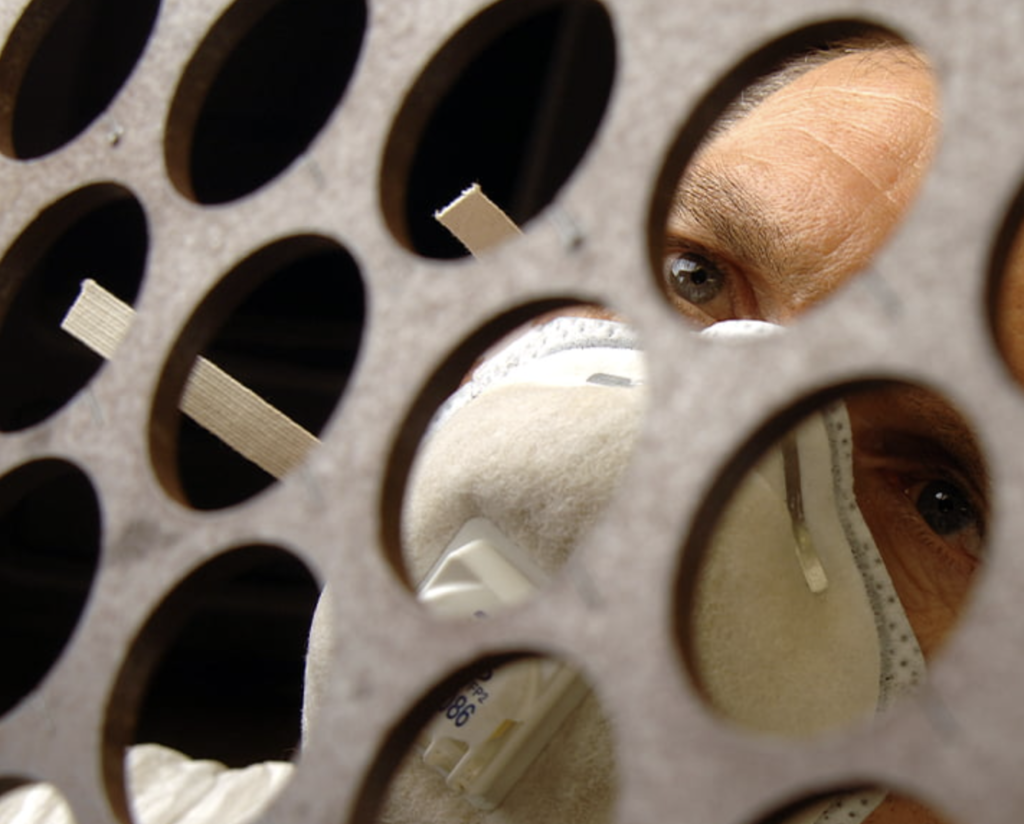
Do you think we need a new hierarchy of needs that includes any new elements, such as circular thinking ? Just considering in part the collaborative & lateral thinking that took place in Covid with for example reusable hospital gowns & ventilators?
In the midst of the horror of the Covid-19 pandemic, we did indeed see some amazing transformations in our approaches to innovation and manufacturing. The example of the speed of vaccine development and production across the world was jaw-dropping. And, yes, the ways in which we found solutions to the dramatic and sudden shortages in basic PPE and medical devices was truly remarkable. We’ve been looking at ways in which such approaches have been diffused more widely post-pandemic … and the results have been mixed. Some of the more localised approaches to production confront a very basic barrier. They are not necessarily going to be the lowest cost provider in the short term. In an era of our healthcare systems needing to focus on cost-cutting, offering more flexible local production – that may have all sorts of other benefits such as increased resilience and reduced pollution – is going to be a tough sell to purchasing managers. That said, the broader transformation of our healthcare systems towards more personalised approaches and increased focus on reducing environmental impact give me hope that such local, collaborative, user-engaged approaches to making our goods will be the future model for manufacturing.